80 × 60 × 4 cm (31.5 × 23.6 × 1.6 inches)
Acrylic on canvas.
I remember watching light flicker through the leaves of trees, and at other times noticing the trembling light of film projected onto a screen. It always felt strangely alive. Around the same time I read that light behaves both as a wave and as a particle — an idea that almost hurt my brain to think about, but also made me curious. It suggested that light might be far more mysterious than the simple role we usually give it. That curiosity has followed me into the studio.
Artists have long treated light as something more than illumination. In the films of Andrei Tarkovsky, light gathers a quiet gravity through time and stillness, allowing ordinary things to feel strangely present. Similarly, artists such as James Turrell approach light almost as a substance — something we inhabit rather than simply observe. Thinking about this made me wonder whether painting might also treat light as something tangible.
This painting sits within a series where the surface is divided, though I have been interested in whether the two halves might still speak to one another. Below, a simple light fitting appears against a tiled surface, the sort of object that normally fades into the background of everyday life. Here the light seems to travel upward, almost physically, moving into the space above where a group of vessels sit within a darker environment. I was curious about that small inversion — whether light might feel less like illumination and more like something moving through the painting itself, quietly connecting these two spaces.
Free shipping anywhere in the world.
80 × 60 × 4 cm (31.5 × 23.6 × 1.6 inches)
Acrylic on canvas.
I remember watching light flicker through the leaves of trees, and at other times noticing the trembling light of film projected onto a screen. It always felt strangely alive. Around the same time I read that light behaves both as a wave and as a particle — an idea that almost hurt my brain to think about, but also made me curious. It suggested that light might be far more mysterious than the simple role we usually give it. That curiosity has followed me into the studio.
Artists have long treated light as something more than illumination. In the films of Andrei Tarkovsky, light gathers a quiet gravity through time and stillness, allowing ordinary things to feel strangely present. Similarly, artists such as James Turrell approach light almost as a substance — something we inhabit rather than simply observe. Thinking about this made me wonder whether painting might also treat light as something tangible.
This painting sits within a series where the surface is divided, though I have been interested in whether the two halves might still speak to one another. Below, a simple light fitting appears against a tiled surface, the sort of object that normally fades into the background of everyday life. Here the light seems to travel upward, almost physically, moving into the space above where a group of vessels sit within a darker environment. I was curious about that small inversion — whether light might feel less like illumination and more like something moving through the painting itself, quietly connecting these two spaces.
Free shipping anywhere in the world.
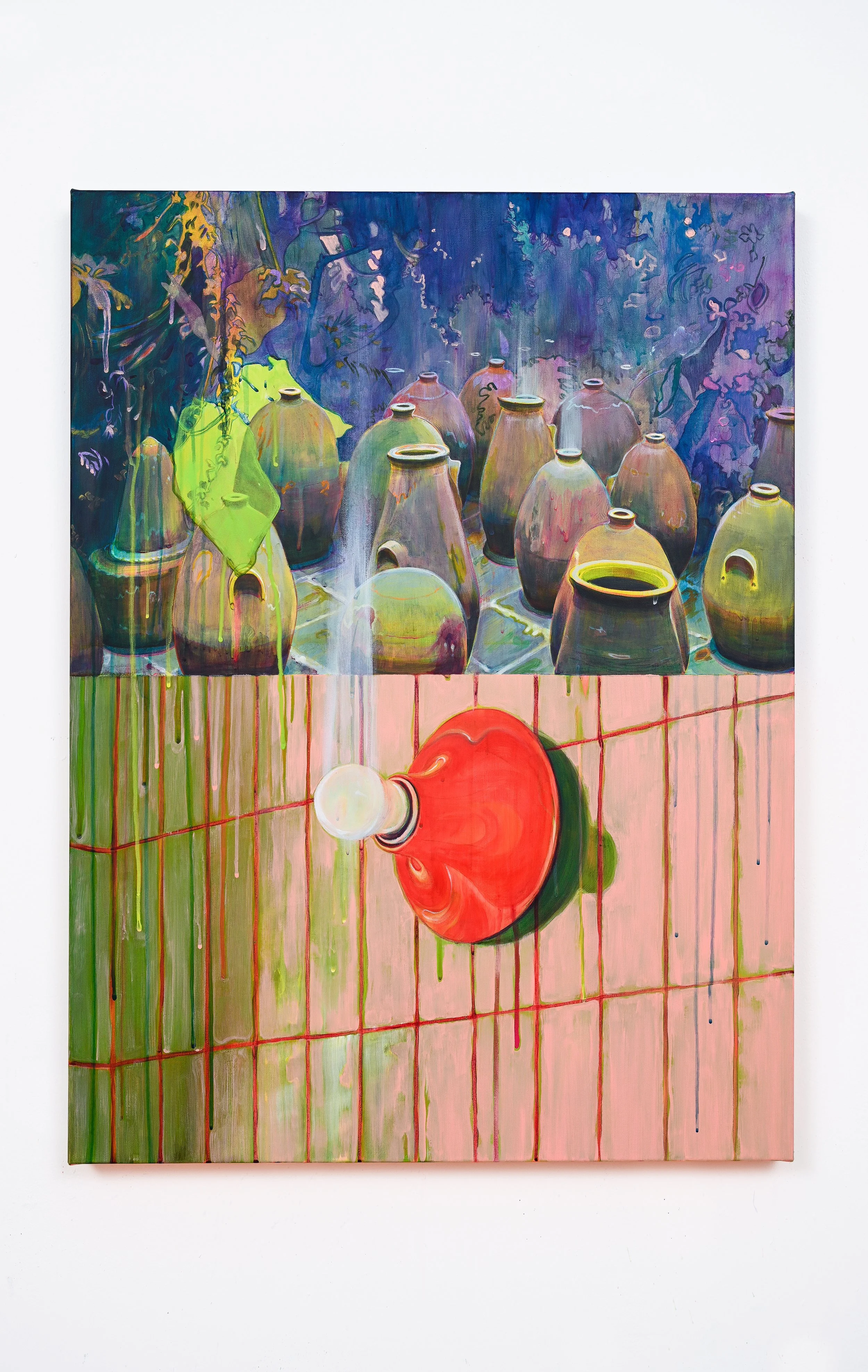 Image 1 of 8
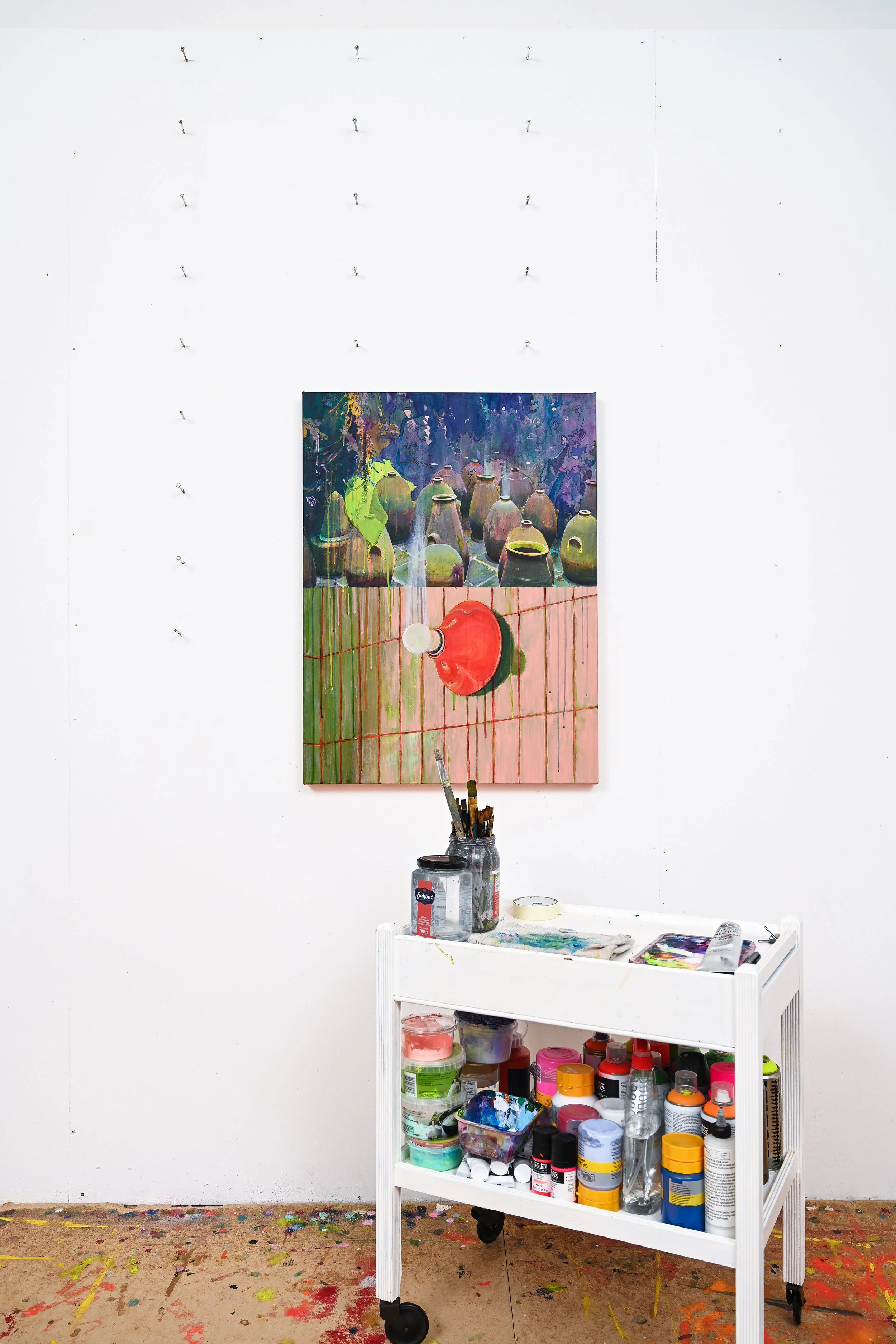 Image 2 of 8
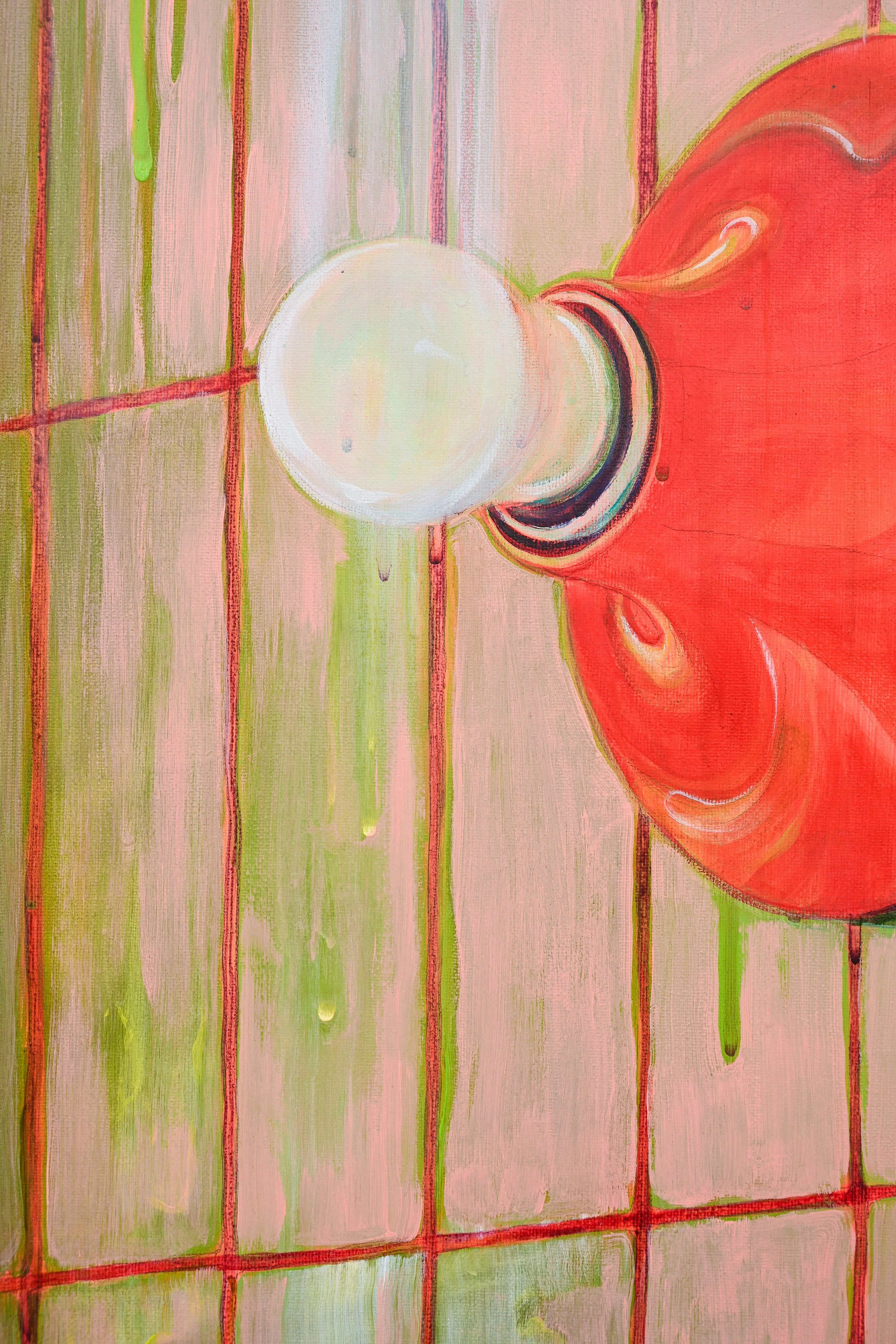 Image 3 of 8
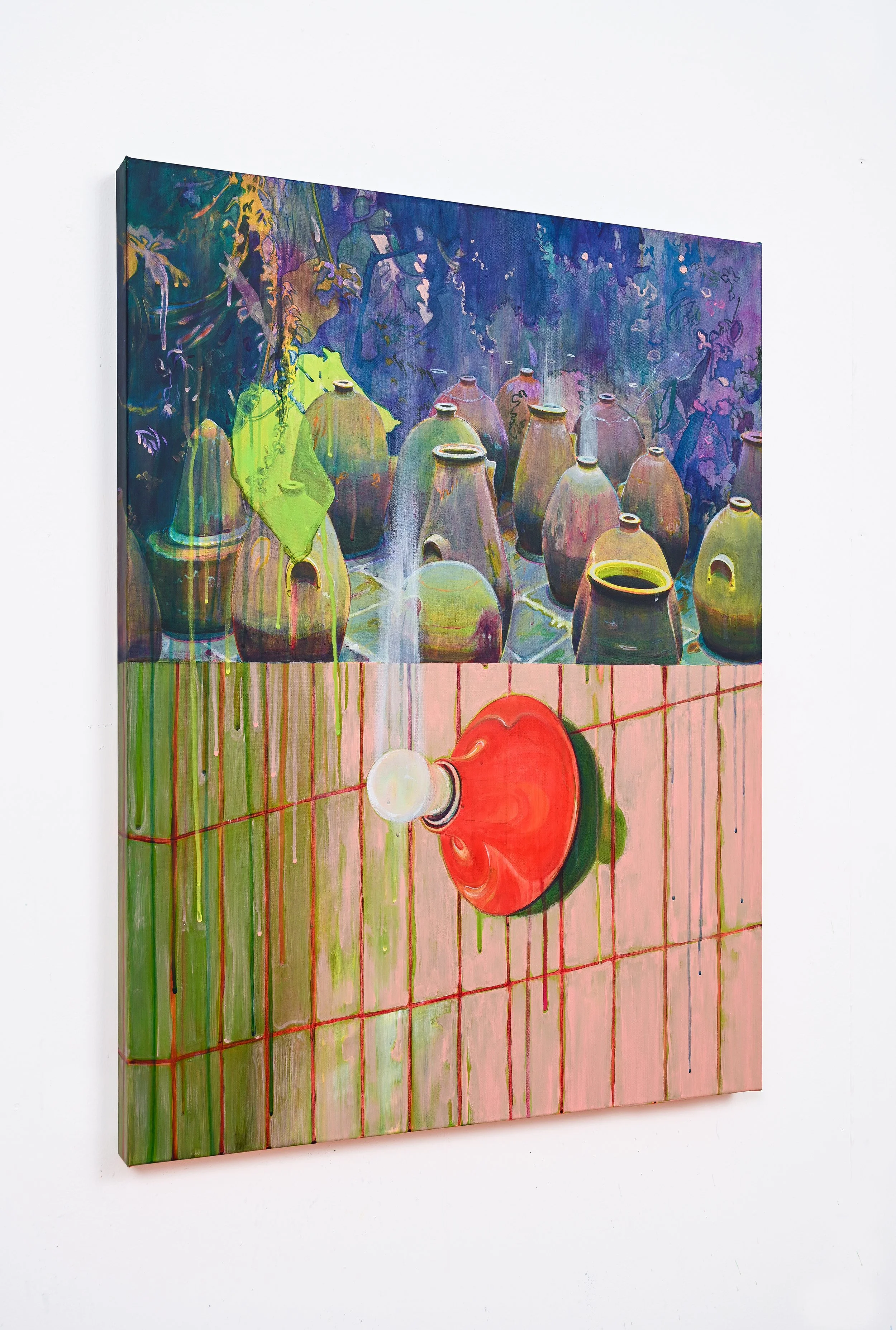 Image 4 of 8
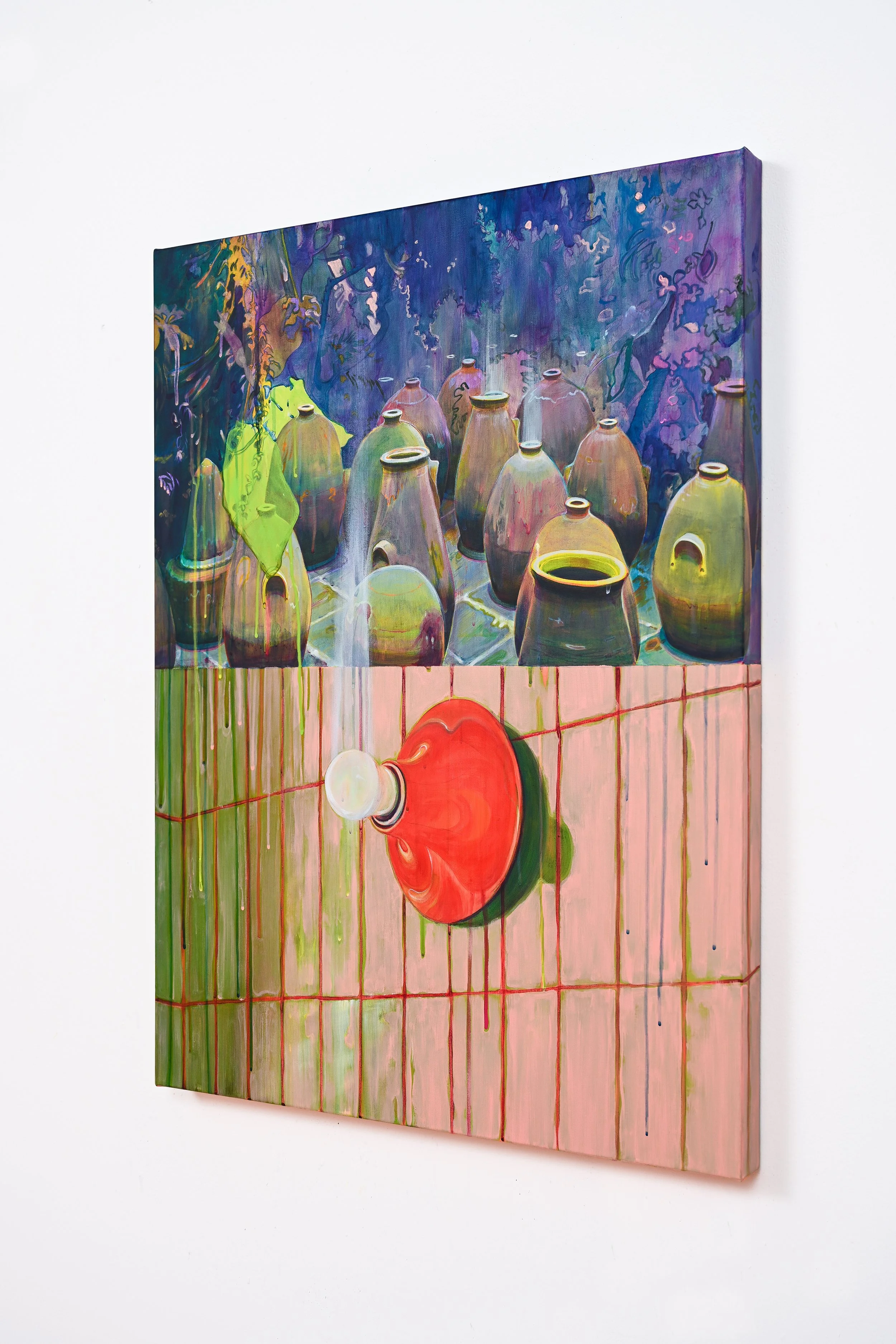 Image 5 of 8
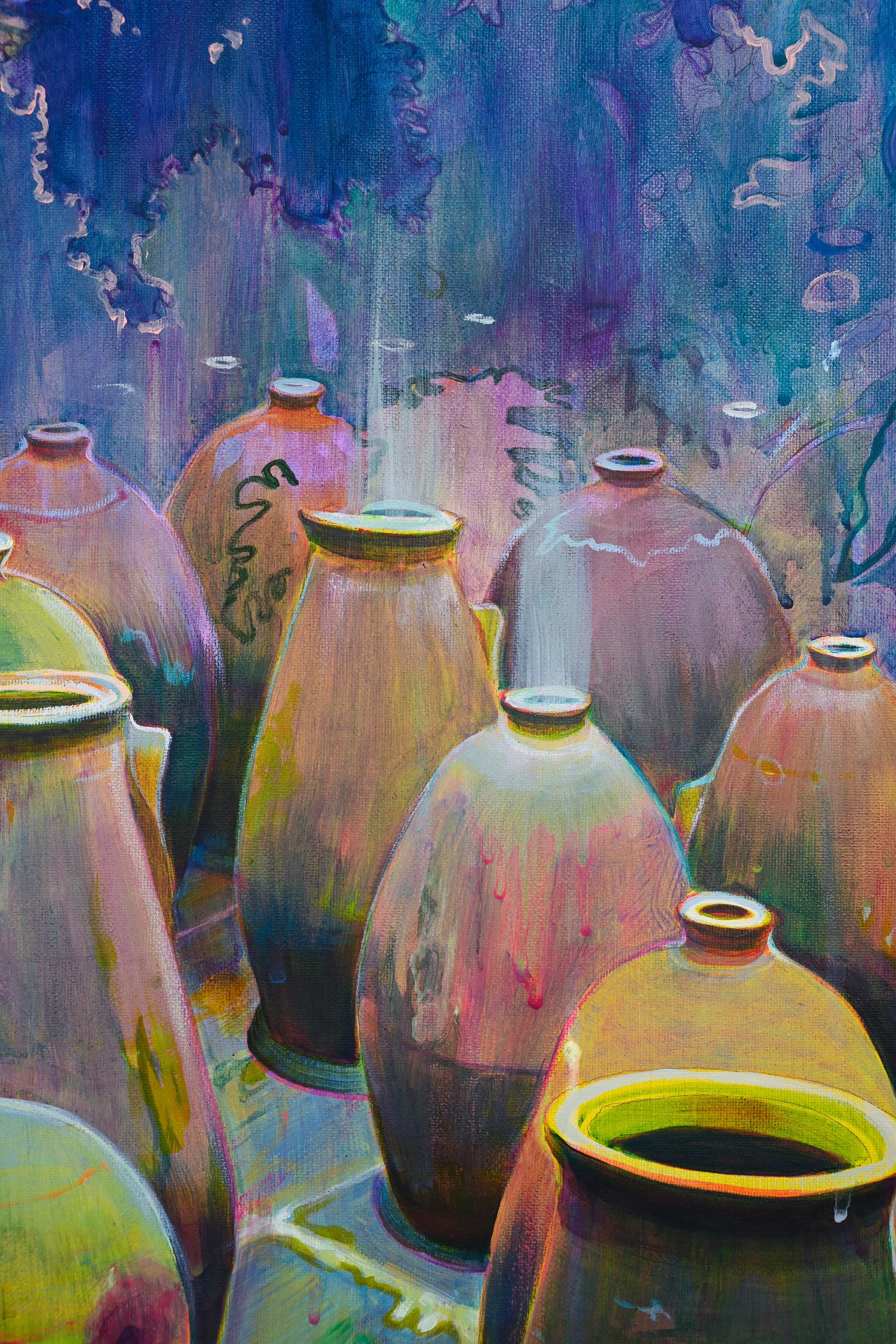 Image 6 of 8
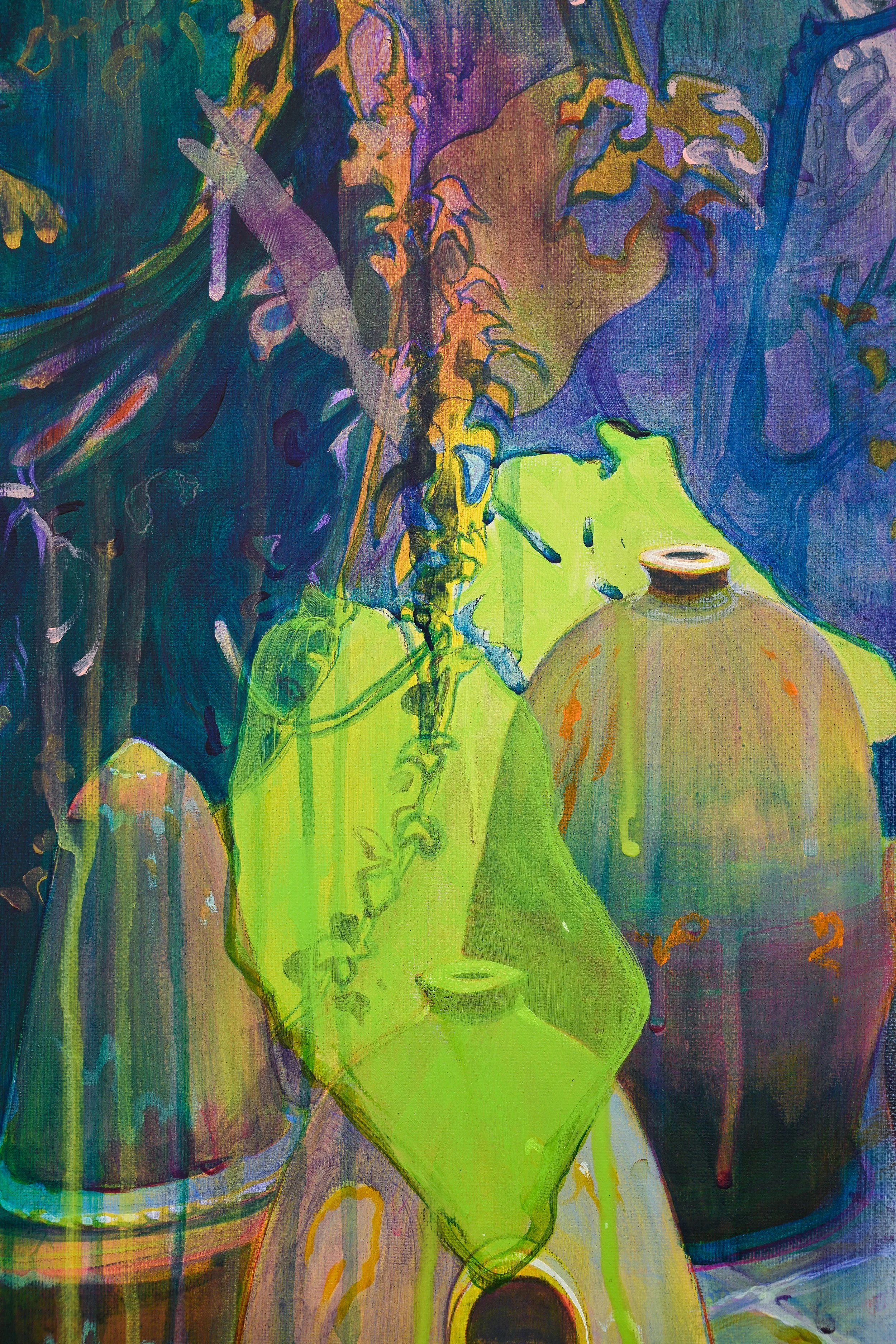 Image 7 of 8
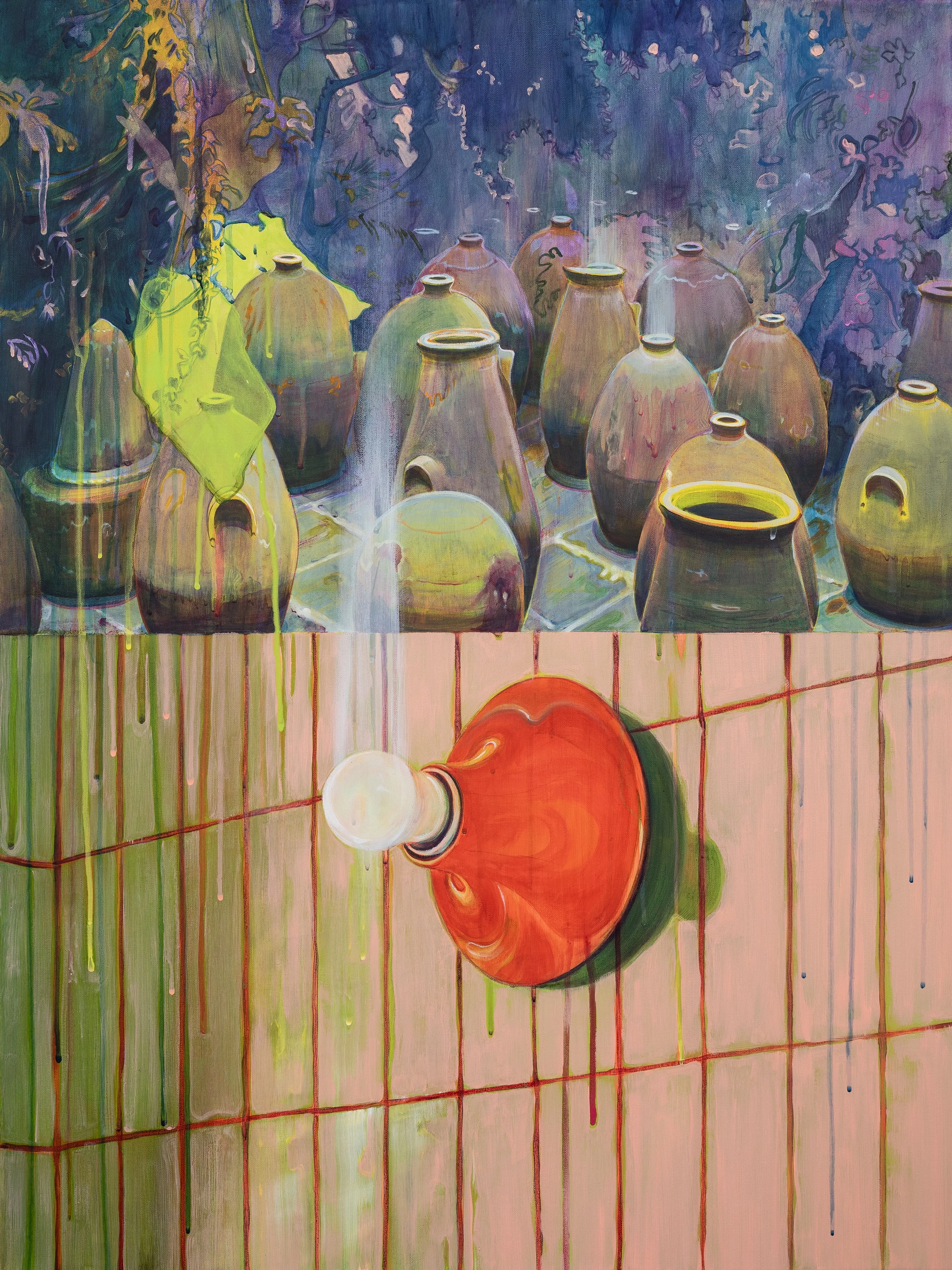 Image 8 of 8