80 × 60 × 4 cm (31.5 × 23.6 × 1.6 inches)
Acrylic on canvas.
Free shipping anywhere in the world.
While reading the writings of Julia Kristeva and spending time again with the work of Louise Bourgeois, I found myself drawn to how both speak so openly about human fragility. Kristeva writes about the destabilising force of loss, while Bourgeois repeatedly returned to emotional memory as something that shapes us whether we want it to or not. Encountering their ideas made me wonder how painting might approach those questions in its own way. I don’t know if a painting can truly hold such things, but I wanted to try — to see whether an image could begin to carry something of that vulnerability.
Around the same time I had been sitting with a sadness of my own. It was not dramatic, but persistent — the quiet recognition of time passing and of people who are no longer present in the way they once were. I began to wonder how others live with that feeling, how we continue moving through ordinary days while carrying something heavier underneath. The figure of the boy looking downward slowly appeared as I worked. I didn’t intend him to represent sadness directly, but he seemed to hold something about that moment when grief makes us feel smaller, almost childlike again, unsure of how to carry what we are feeling.
The painting became an attempt to give that fragile state some form. The upper half holds the figure within a shifting landscape that feels both dense and alive. Below, droplets fall across a patterned surface, interrupting its regular rhythm. As I worked, they began to feel less like rain and more like tears breaking the steady pattern of daily life. Yet within that disturbance there is also a kind of quiet beauty — the way forms soften, colours bleed, and something more open begins to emerge. I’m not sure whether the painting resolves these thoughts, but it is an attempt to sit with them: with sadness, with memory, and with the fragile possibility that even in loss there can still be moments of tenderness and light.
80 × 60 × 4 cm (31.5 × 23.6 × 1.6 inches)
Acrylic on canvas.
Free shipping anywhere in the world.
While reading the writings of Julia Kristeva and spending time again with the work of Louise Bourgeois, I found myself drawn to how both speak so openly about human fragility. Kristeva writes about the destabilising force of loss, while Bourgeois repeatedly returned to emotional memory as something that shapes us whether we want it to or not. Encountering their ideas made me wonder how painting might approach those questions in its own way. I don’t know if a painting can truly hold such things, but I wanted to try — to see whether an image could begin to carry something of that vulnerability.
Around the same time I had been sitting with a sadness of my own. It was not dramatic, but persistent — the quiet recognition of time passing and of people who are no longer present in the way they once were. I began to wonder how others live with that feeling, how we continue moving through ordinary days while carrying something heavier underneath. The figure of the boy looking downward slowly appeared as I worked. I didn’t intend him to represent sadness directly, but he seemed to hold something about that moment when grief makes us feel smaller, almost childlike again, unsure of how to carry what we are feeling.
The painting became an attempt to give that fragile state some form. The upper half holds the figure within a shifting landscape that feels both dense and alive. Below, droplets fall across a patterned surface, interrupting its regular rhythm. As I worked, they began to feel less like rain and more like tears breaking the steady pattern of daily life. Yet within that disturbance there is also a kind of quiet beauty — the way forms soften, colours bleed, and something more open begins to emerge. I’m not sure whether the painting resolves these thoughts, but it is an attempt to sit with them: with sadness, with memory, and with the fragile possibility that even in loss there can still be moments of tenderness and light.
 Image 1 of 8
 Image 2 of 8
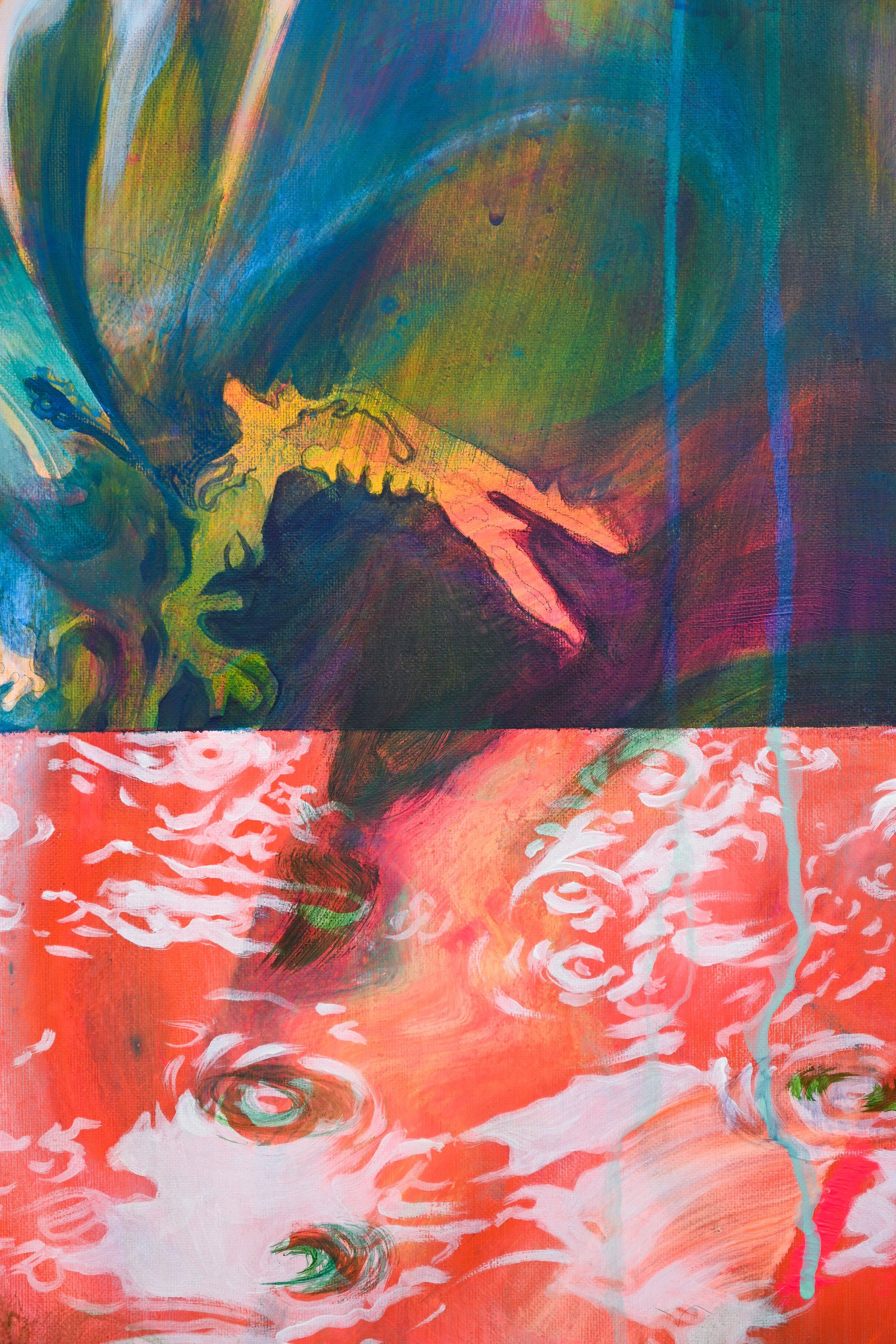 Image 3 of 8
 Image 4 of 8
 Image 5 of 8
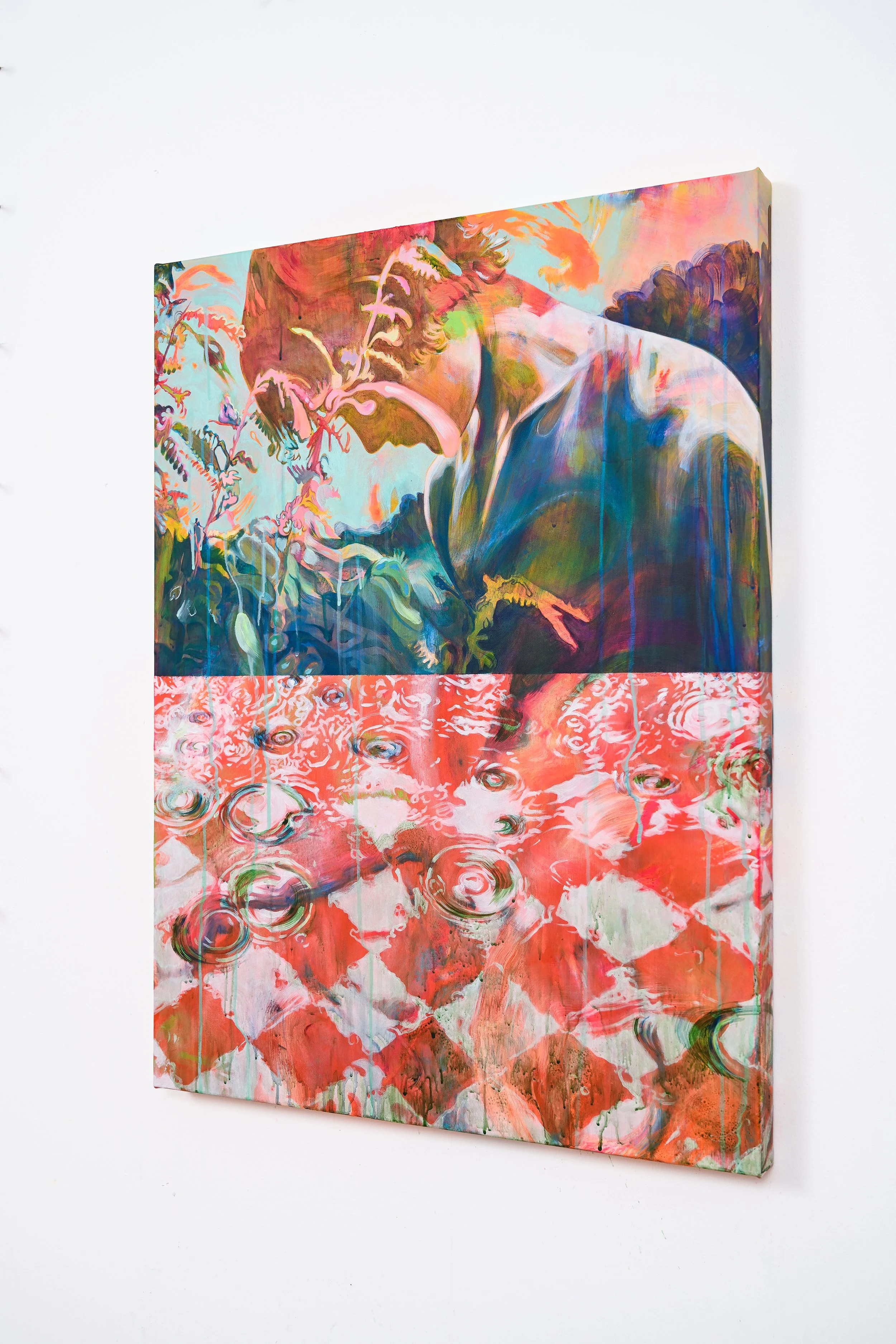 Image 6 of 8
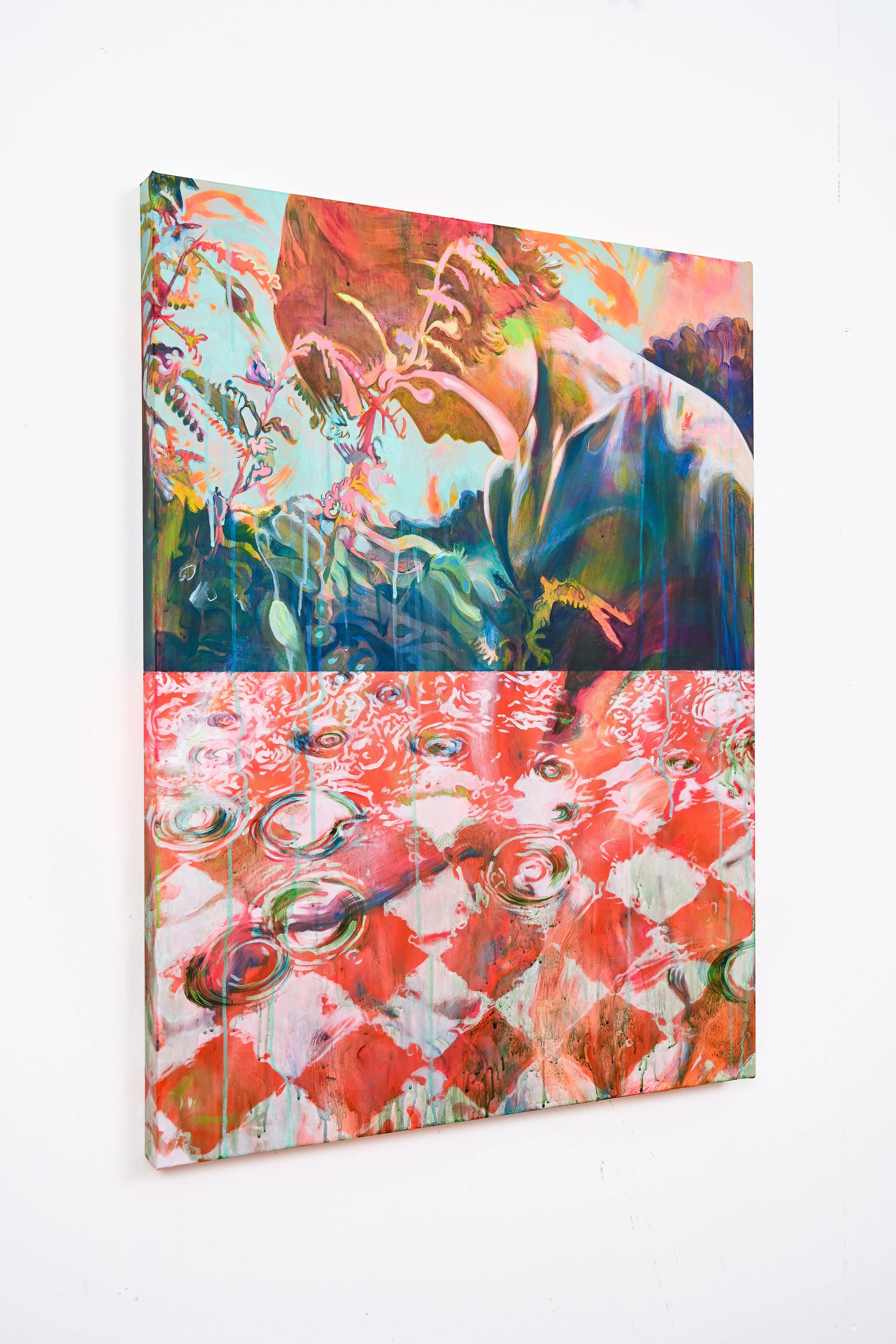 Image 7 of 8
 Image 8 of 8