80 × 60 × 4 cm (31.5 × 23.6 × 1.6 inches)
Acrylic on canvas.
Free shipping anywhere in the world.
I remember being taught the water cycle at school — evaporation rising invisibly, clouds forming, rain returning to the ground. At the time it seemed like a simple diagram, a closed system explained through arrows and repetition. Only later did it begin to feel quietly profound. The idea that what disappears is not gone, that what falls will rise again, carries a resonance beyond science. While painting this work, that early lesson returned as something poetic rather than instructional. The divided composition — clouds above, a hand below — became two states of the same continuous movement.
The hand is grounded and bodily, its tones warm and organic, while the vapour or cloud it appears to release holds a charged, almost electric quality. The gesture hovers between grasping and letting go. The phrase “all that is solid melts into air,” from Marx and Engels stayed with me during the process. It acknowledges a deep instability: that forms we assume to be fixed are always in transition. Matter shifts state; certainty dissolves. I was also thinking of Gaston Bachelard’s The Water and Dreams, where water becomes both substance and imagination, dissolving boundaries between the physical and the interior. The drips across the upper half feel like rain, but also like time marking the surface.
The painting became a meditation on cycles — of growth and erosion, birth and decay — and on our place within systems that exceed us. Water moves through landscapes and bodies alike, sustaining life while constantly transforming. What appears solid inevitably softens; what seems to vanish gathers again. In holding these states together, I was thinking about how existence itself may be less about permanence and more about passage.
80 × 60 × 4 cm (31.5 × 23.6 × 1.6 inches)
Acrylic on canvas.
Free shipping anywhere in the world.
I remember being taught the water cycle at school — evaporation rising invisibly, clouds forming, rain returning to the ground. At the time it seemed like a simple diagram, a closed system explained through arrows and repetition. Only later did it begin to feel quietly profound. The idea that what disappears is not gone, that what falls will rise again, carries a resonance beyond science. While painting this work, that early lesson returned as something poetic rather than instructional. The divided composition — clouds above, a hand below — became two states of the same continuous movement.
The hand is grounded and bodily, its tones warm and organic, while the vapour or cloud it appears to release holds a charged, almost electric quality. The gesture hovers between grasping and letting go. The phrase “all that is solid melts into air,” from Marx and Engels stayed with me during the process. It acknowledges a deep instability: that forms we assume to be fixed are always in transition. Matter shifts state; certainty dissolves. I was also thinking of Gaston Bachelard’s The Water and Dreams, where water becomes both substance and imagination, dissolving boundaries between the physical and the interior. The drips across the upper half feel like rain, but also like time marking the surface.
The painting became a meditation on cycles — of growth and erosion, birth and decay — and on our place within systems that exceed us. Water moves through landscapes and bodies alike, sustaining life while constantly transforming. What appears solid inevitably softens; what seems to vanish gathers again. In holding these states together, I was thinking about how existence itself may be less about permanence and more about passage.
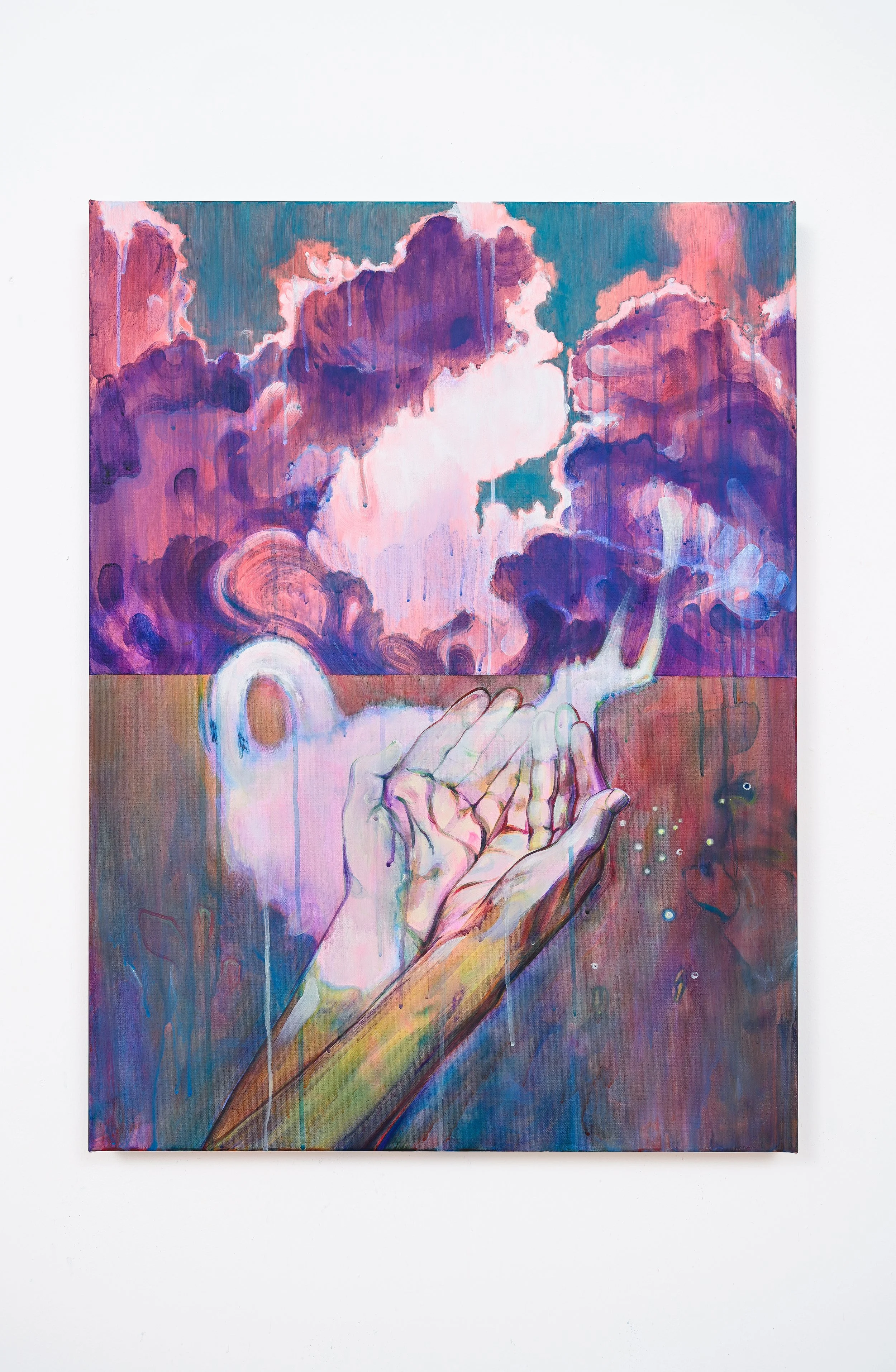 Image 1 of 8
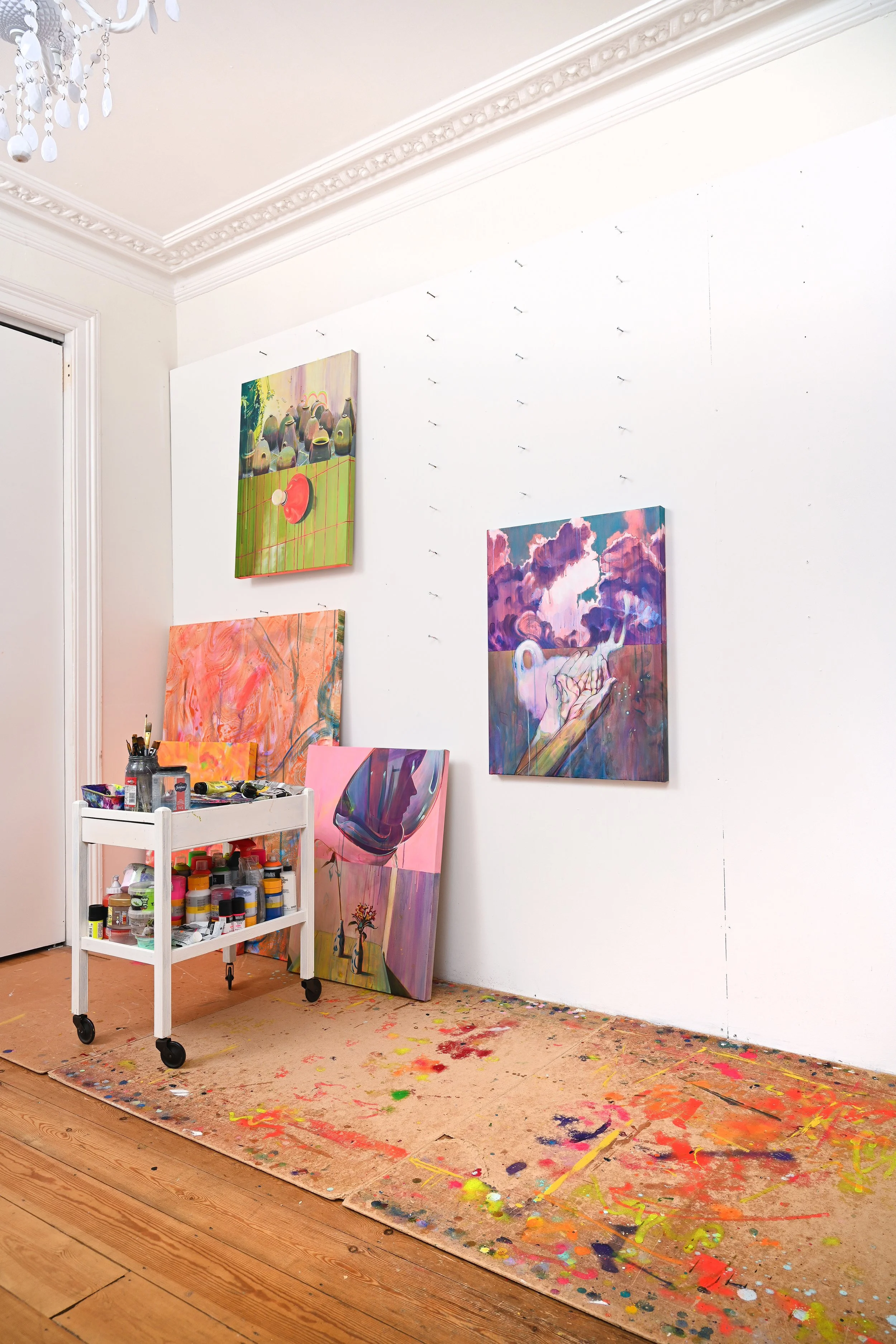 Image 2 of 8
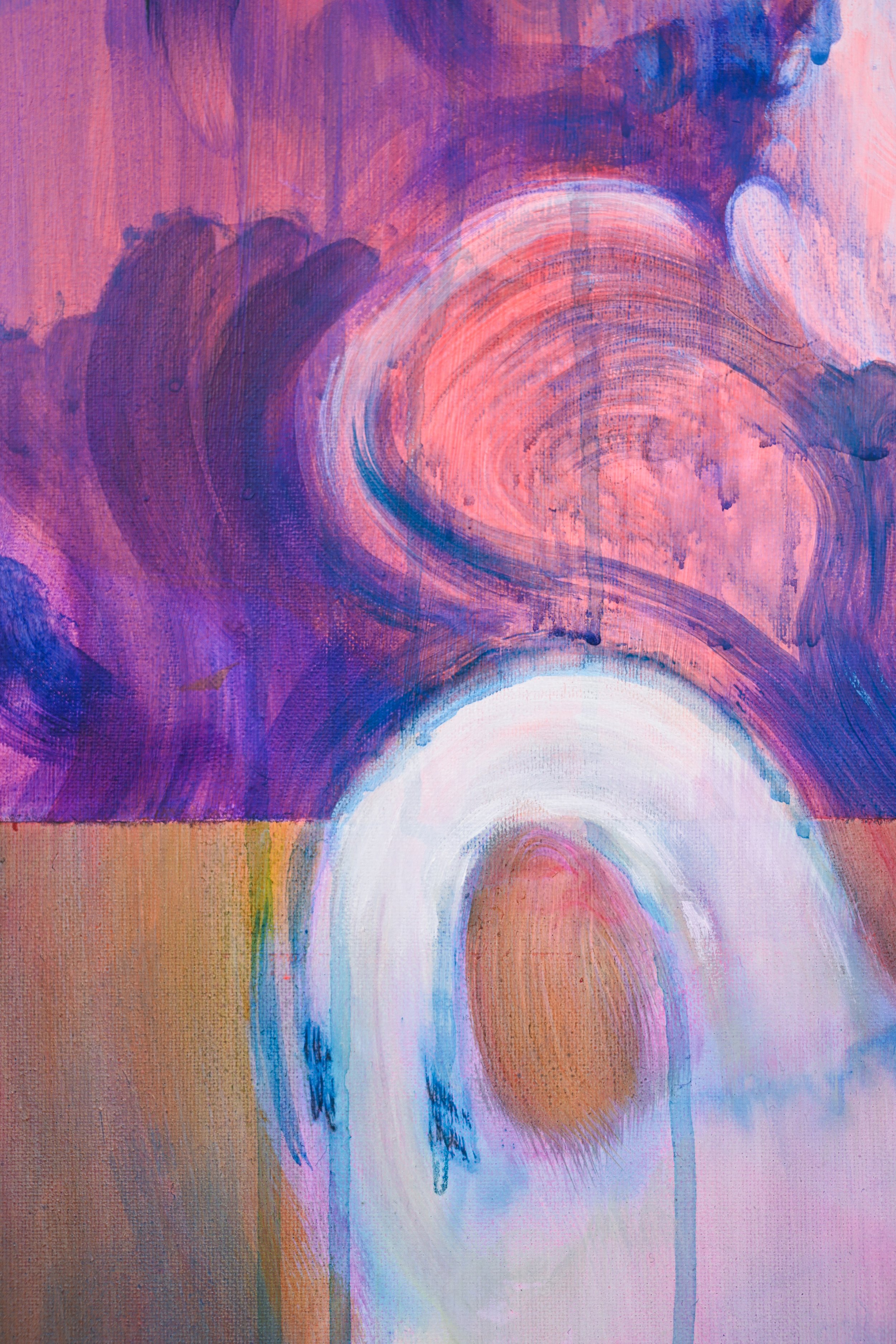 Image 3 of 8
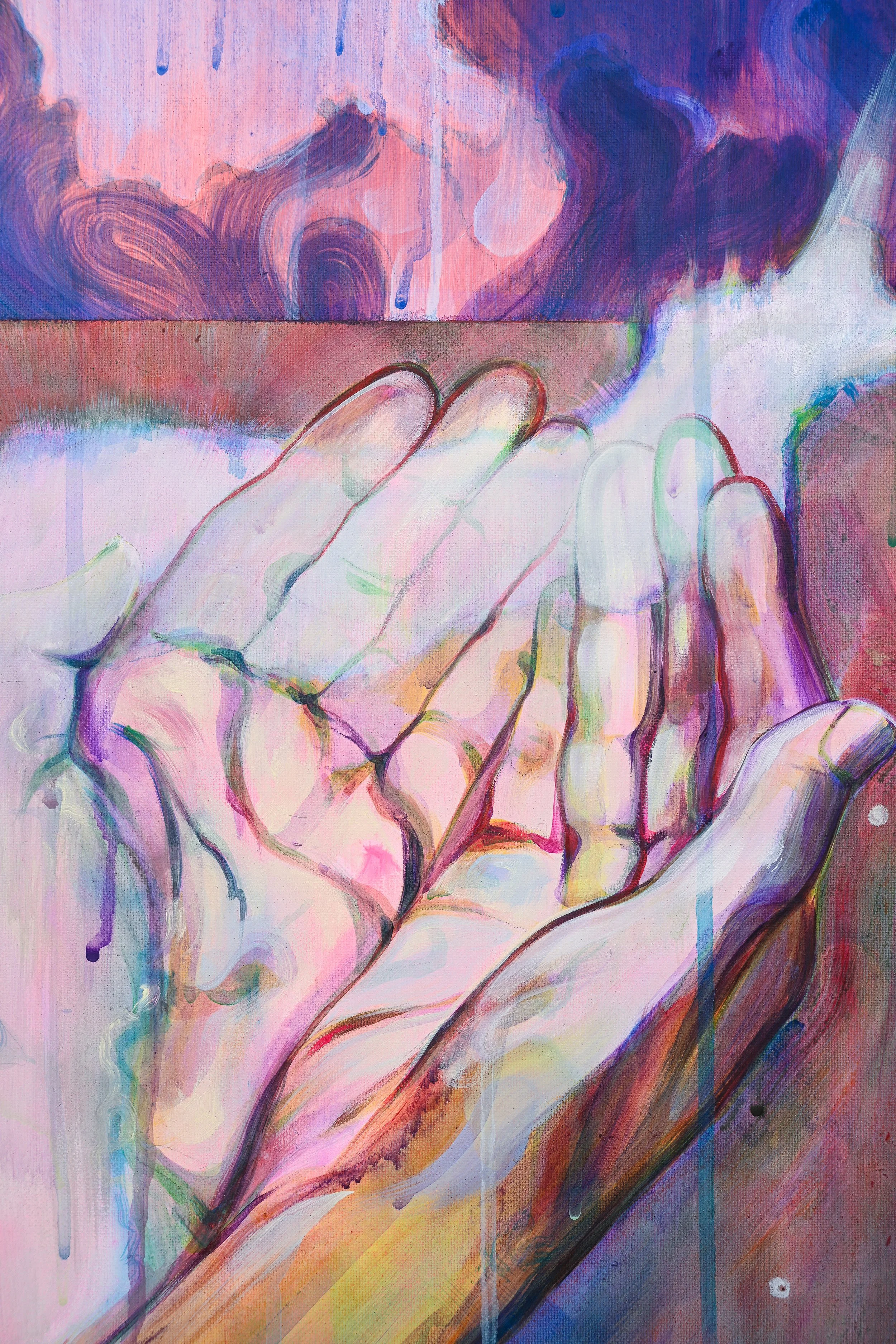 Image 4 of 8
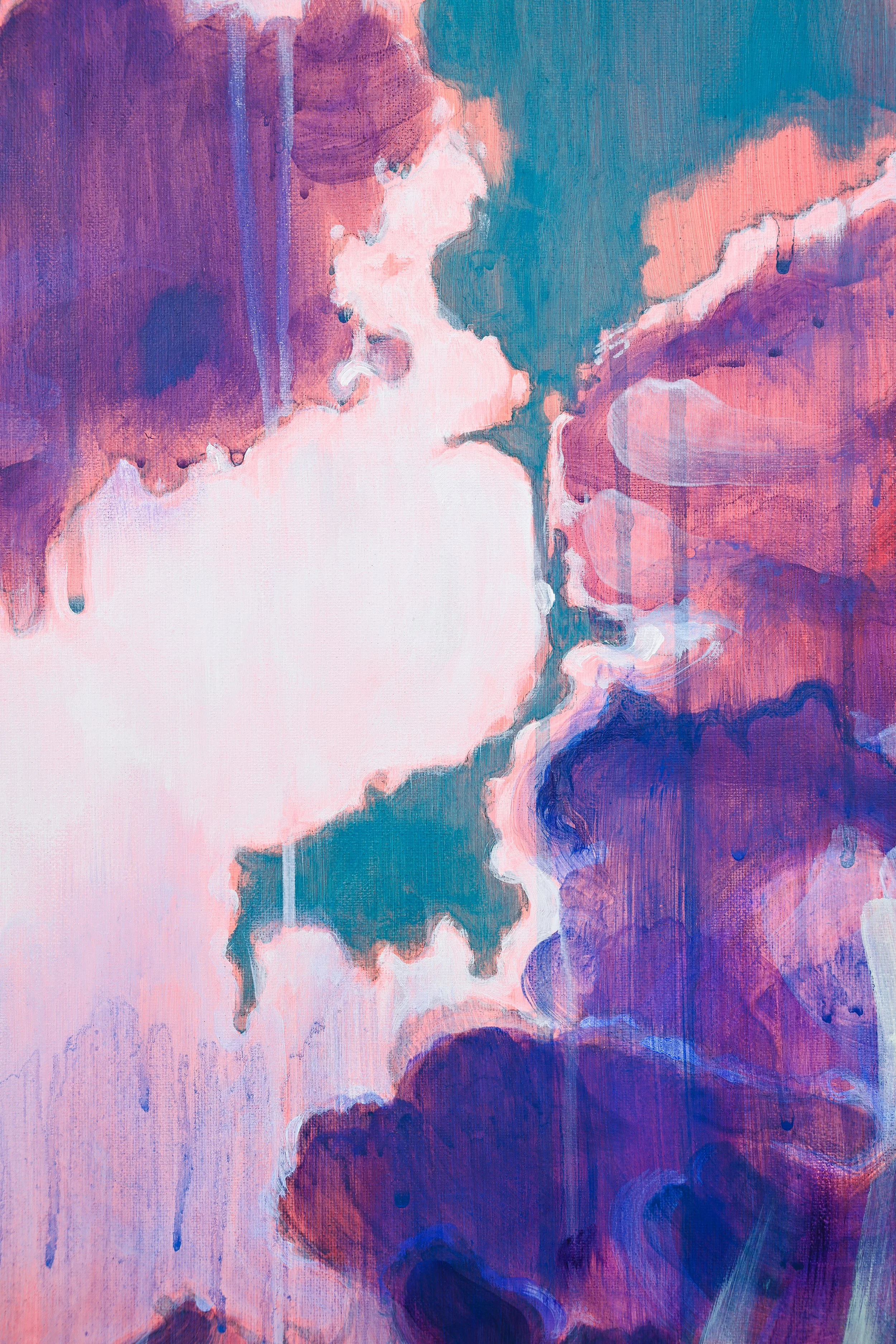 Image 5 of 8
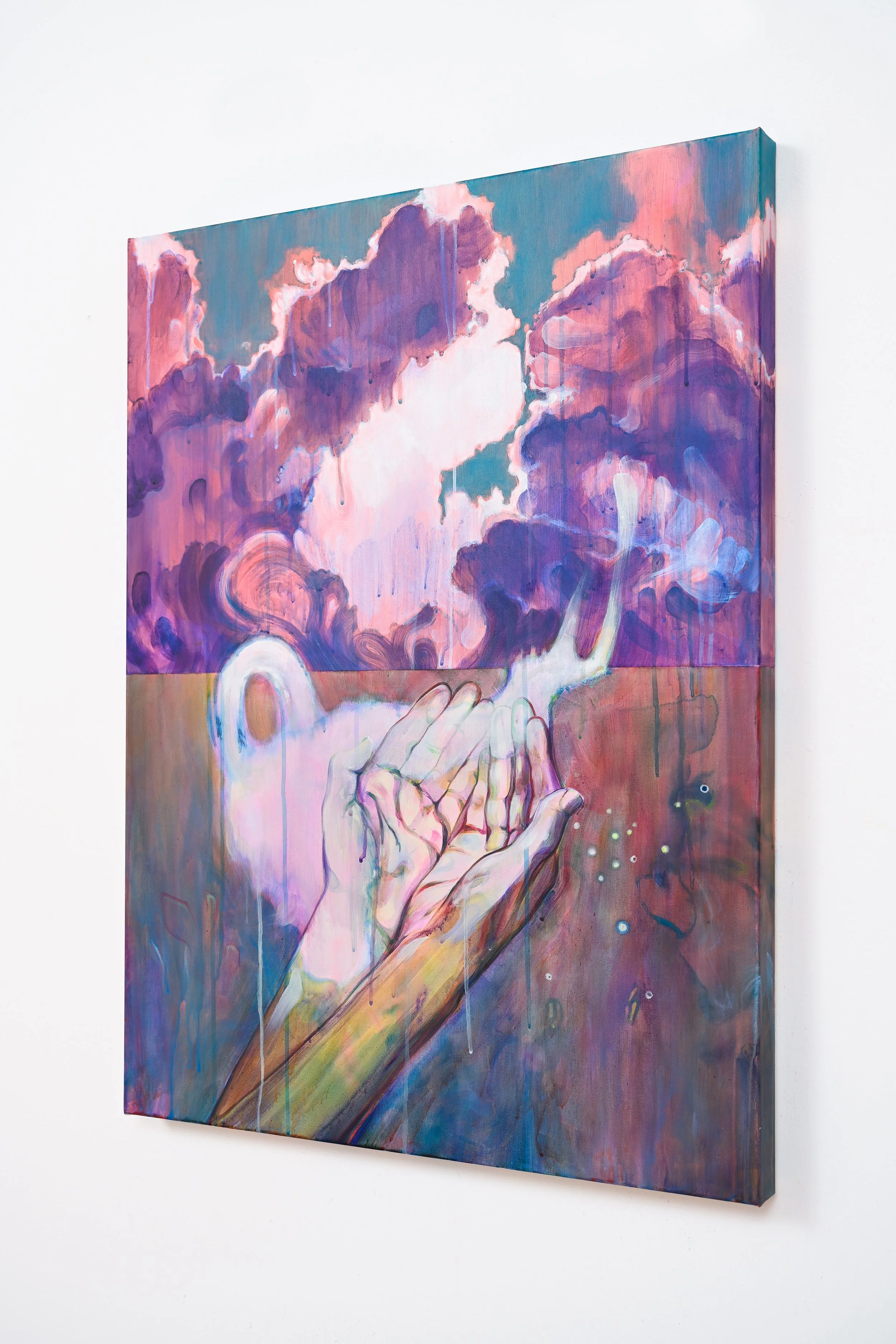 Image 6 of 8
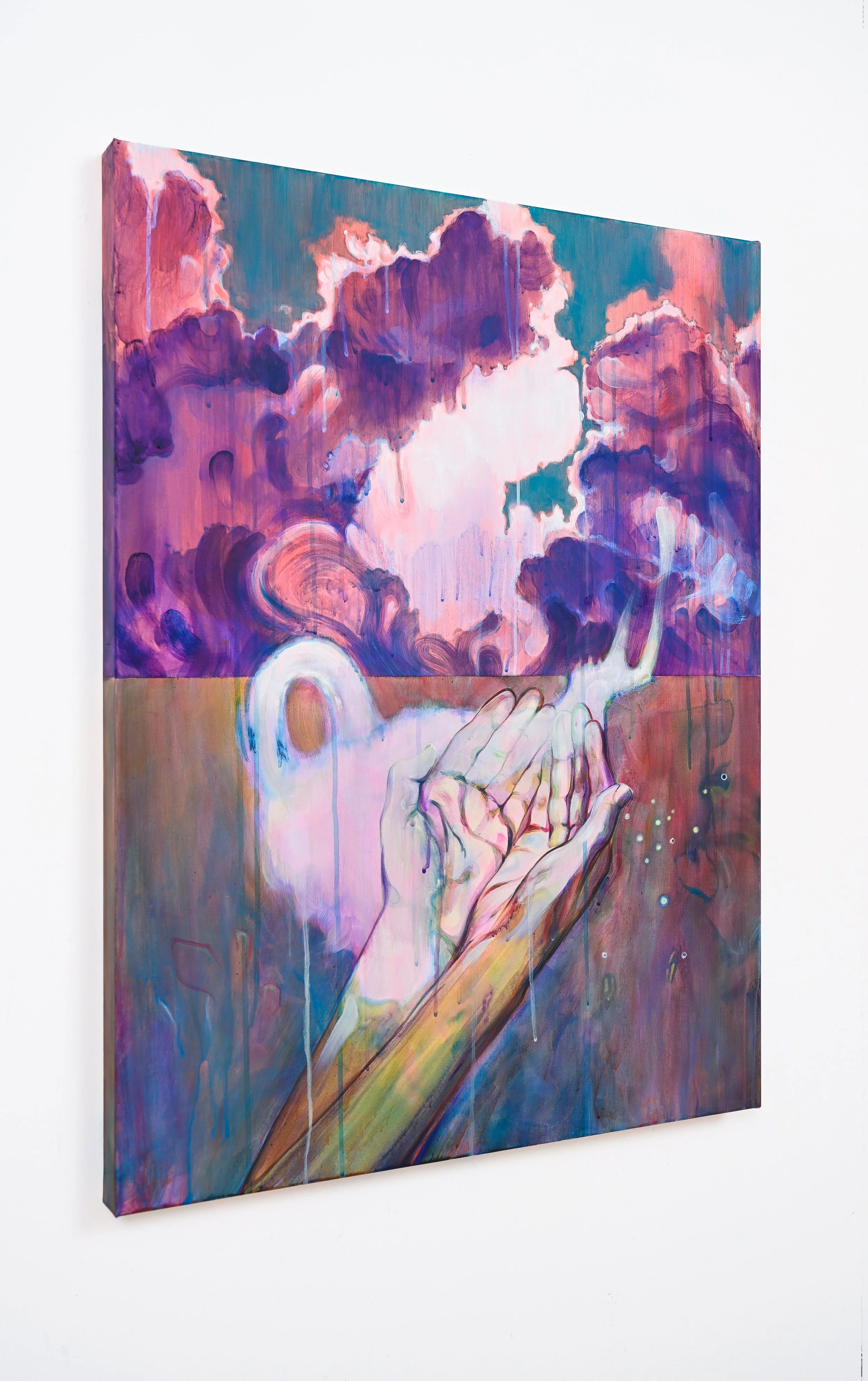 Image 7 of 8
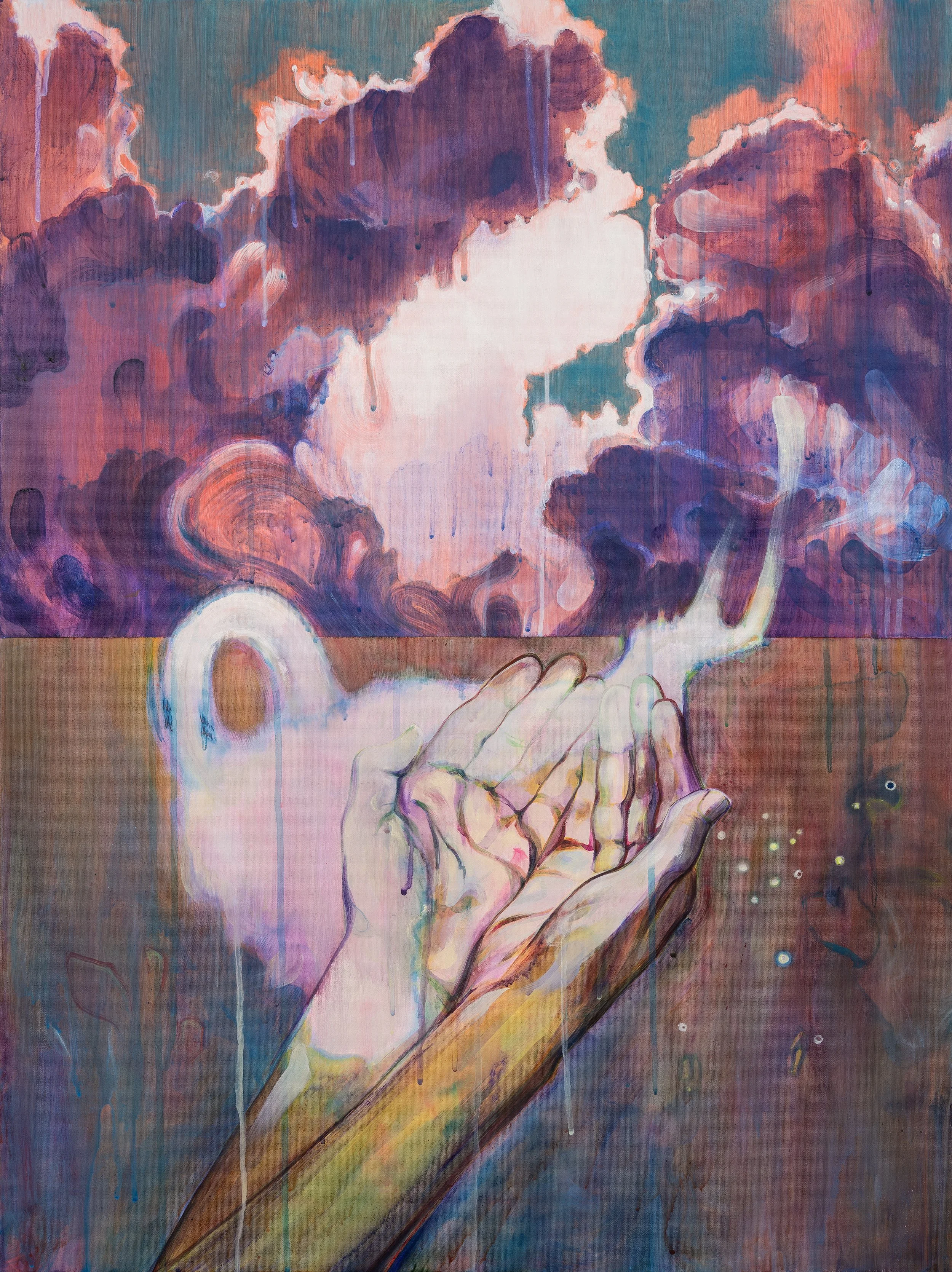 Image 8 of 8